In brief
- Secondary containment, such as a bund, spill tray or double-skin tank, holds anything that escapes from the first container.
- An above-ground tank system that can hold 250 litres or more needs containment for at least 110% of the largest container.
- Petrol doesn't need it below 1,000 litres, and a farm doesn't need it below 2,500 litres of fuel in a tank or 2,000 litres in drums.
- Keep outdoor bunds drained, because a bund full of rainwater won't hold a spill.
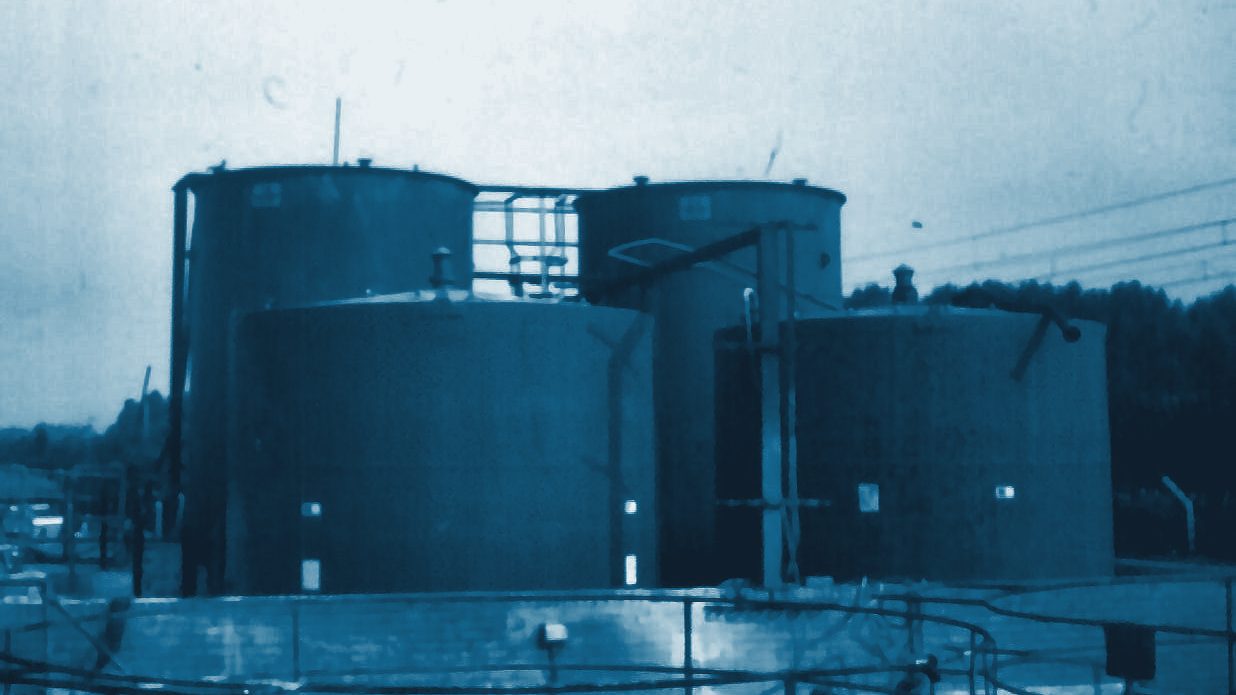
Secondary containment is a second barrier around a container of hazardous liquid, there to hold anything that escapes from the first one. It stops a split drum or a leaking tank from reaching drains, waterways or an ignition source, and it gives you time to deal with the spill. It can be as simple as a spill tray under a few drums or as substantial as a concrete bund around a fuel tank.
What counts as containment
WorkSafe describes a secondary containment system as one that can contain the hazardous substance and safely collect it. Common examples are:
- spill trays and bunded pallets for drums and containers
- liners and bunded storage areas
- concrete or steel bunds around tanks
- double-skin tanks, where an outer shell surrounds the inner tank
When it is required
The requirement applies to pooling substances, meaning liquids and substances that would melt into a liquid in a fire, held above set quantities. The rules sit in different regulations for different hazard classes: regulation 10.30 for flammable liquids (class 3), regulation 13.30 for toxic and corrosive substances (classes 6 and 8), and regulation 17.99 for stationary tanks. Since January 2022, tanks are dealt with only under regulation 17.99.
WorkSafe's summary of key controls lists the thresholds alongside those for emergency response plans, for example more than 100 litres of class 3.1A flammable liquids. Two exceptions come up often:
- petrol doesn't need secondary containment below 1,000 litres
- on a farm, containment isn't needed for less than 2,500 litres of fuel in a tank, or less than 2,000 litres in drums, at one location
Because the thresholds depend on the substance and the size of the containers, check your own mix with WorkSafe's calculator rather than relying on a single figure.
How big it has to be
For an above-ground stationary tank system that can hold 250 litres or more, the secondary containment must hold at least 110% of the capacity of the largest container. A below-ground tank must be double-skinned or sit in an impermeable pit.
For drums and packaged substances, the required capacity depends on the class of substance and the total quantity that could pool. WorkSafe publishes a secondary containment calculation tool to work it out, and forms to apply for a reduced or increased capacity where a site's circumstances justify it.
A worked example
A single 5,000 litre tank needs a bund that holds at least 5,500 litres. If a 3,000 litre tank and a 5,000 litre tank share one bund, the bund still needs to hold at least 5,500 litres, because the rule is based on the largest container rather than the total. Remember that the tank and its supports take up room inside the bund, so the space left for liquid is less than the bund's outer dimensions suggest.
Rainwater and maintenance
An uncovered bund collects rain, and a bund half full of water won't hold a spill. Keep outdoor bunds drained through a valve that stays closed by default, check them after heavy rain, and remove any oil or fuel before releasing water. Inspect liners and concrete for cracks, and keep the bund clear of stored rubbish.
Containment capacity also affects how long a tank certificate lasts. Under WorkSafe's 2018 safe work instrument, a single-skin above-ground tank with 110% secondary containment can be certified for five years instead of one.
Getting it right first time
Containment is expensive to rebuild once concrete is poured, so check the capacity before building. We can review a design, or inspect an existing bund before your certification visit. See our compliance advice.
This is general guidance based on the regulations and WorkSafe's published material. It is not legal advice. WorkSafe has said updated guidance on secondary containment for pooling substances is coming; check its page for the latest.
Sources
- Health and Safety at Work (Hazardous Substances) Regulations 2017 (LI 2017/131), regs 10.30, 13.30 and 17.99, as amended by the Health and Safety at Work (Hazardous Substances) Amendment Regulations 2021 (LI 2021/372). New Zealand Legislation. Accessed 16 October 2026. https://www.legislation.govt.nz/regulation/public/2017/0131/latest/whole.html.
- WorkSafe New Zealand. "About Secondary Containment Systems." Last modified 3 July 2023. Accessed 16 October 2026. https://www.worksafe.govt.nz/topic-and-industry/hazardous-substances/managing/secondary-containment-systems/.
- WorkSafe New Zealand and MBIE. Working Safely with Hazardous Substances: A Practical Guide, section 6.0. Accessed 16 October 2026. https://hazardoussubstances.govt.nz/media/opvoss5f/practical-guide-section-60.pdf.
- WorkSafe New Zealand. "Above Ground Fuel Storage on Farms." Last modified 7 October 2021. Accessed 16 October 2026. https://www.worksafe.govt.nz/topic-and-industry/agriculture/chemicals-and-fuels-on-farms/above-ground-fuel-storage-on-farms/.